

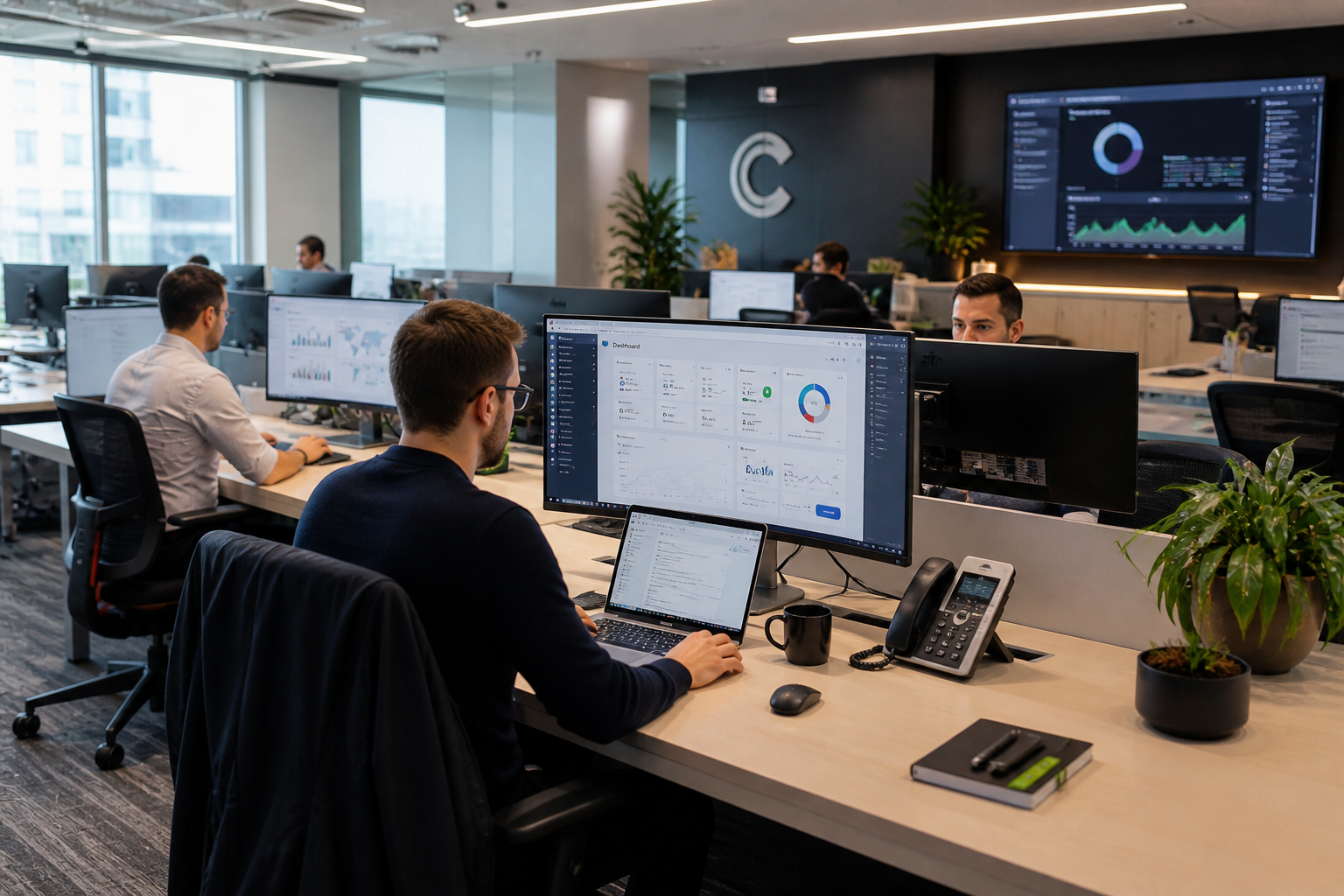
The business computing world has transformed dramatically over the past decade, reshaping how organizations operate, communicate, and compete in global markets. From small startups to multinational corporations across the USA, UK, and Canada, technology infrastructure now determines competitive advantage and operational efficiency. This comprehensive guide explores the essential components of modern business computing, emerging trends, practical implementation strategies, and how organizations can leverage technology to drive growth and innovation.
Understanding the Modern Business Computing World
The business computing world encompasses all technological systems, software, hardware, networks, and digital processes that organizations use to conduct operations and achieve strategic objectives. This ecosystem extends far beyond simple desktop computers, incorporating cloud infrastructure, mobile devices, enterprise applications, data analytics platforms, cybersecurity systems, and communication technologies that work together to enable business functions.
Modern business computing represents a fundamental shift from isolated technology deployments to integrated digital ecosystems where systems communicate seamlessly. Organizations now operate with interconnected platforms where customer relationship management systems share data with accounting software, inventory management connects to supply chain logistics, and business intelligence tools draw information from multiple sources to provide actionable insights. This integration creates efficiency gains impossible in previous eras when departments operated separate technology silos.
The evolution of the business computing world reflects broader digital transformation trends affecting every industry sector. Traditional boundaries between information technology departments and business operations have blurred, with technology becoming embedded in core business processes rather than serving as supporting infrastructure. Understanding this integrated approach proves essential for organizations seeking to compete effectively in markets where technological capability increasingly determines success.
Essential Components of Business Computing Infrastructure
Every organization participating in the business computing world relies on foundational infrastructure components that enable daily operations and support growth objectives. Hardware infrastructure including servers, workstations, mobile devices, networking equipment, and peripheral devices forms the physical layer supporting all digital activities. Selecting appropriate hardware requires balancing performance needs against budget constraints while planning for scalability as organizations grow.
Software applications constitute another critical infrastructure element, ranging from operating systems and productivity suites to specialized business applications serving specific functional needs. Enterprise resource planning systems integrate multiple business processes, customer relationship management platforms support sales and service operations, and collaboration tools enable teamwork across distributed locations. The business computing world now offers both traditional licensed software and cloud-based subscription services, creating flexible options for organizations with different requirements and preferences.
Network infrastructure connects all computing resources, enabling communication and data sharing essential for modern business operations. Local area networks within offices, wide area networks connecting multiple locations, internet connectivity providing external access, and increasingly wireless networks supporting mobile work all contribute to the connectivity fabric underlying business computing. Reliable, secure, high-performance networking represents a foundational requirement that organizations sometimes overlook until connectivity problems disrupt operations.
Cloud Computing Revolution in the Business World
Cloud computing has fundamentally reshaped the business computing world by shifting infrastructure and applications from on-premises installations to internet-delivered services. This transformation allows organizations to access enterprise-grade computing resources without massive capital investments in hardware and facilities, democratizing technology access for businesses of all sizes. Companies across the USA, UK, and Canada now leverage cloud platforms for everything from basic email services to sophisticated data analytics and artificial intelligence applications.
The cloud service model offers several deployment options matching different business requirements. Infrastructure as a Service provides virtual computing resources that organizations configure and manage themselves, offering maximum flexibility and control. Platform as a Service delivers development environments where businesses build custom applications without managing underlying infrastructure. Software as a Service provides ready-to-use applications accessible through web browsers, eliminating installation and maintenance responsibilities while ensuring users always access current versions.
Adopting cloud computing introduces both opportunities and considerations for organizations navigating the business computing world. Benefits include reduced capital expenses, improved scalability, enhanced disaster recovery capabilities, and access to cutting-edge technologies without constant hardware upgrades. However, businesses must address data security concerns, ensure regulatory compliance, manage ongoing subscription costs, and maintain adequate internet connectivity to access cloud-based resources reliably.
Cybersecurity Challenges in Business Computing

Security represents one of the most critical challenges facing organizations in today’s business computing world, with cyber threats growing in sophistication and frequency. Businesses store valuable data including customer information, financial records, intellectual property, and operational details that attract malicious actors seeking financial gain or competitive advantage. The interconnected nature of modern business systems creates multiple potential entry points for attacks, requiring comprehensive security approaches rather than isolated protective measures.
Common cybersecurity threats include malware infections that compromise systems or encrypt data for ransom, phishing attacks tricking employees into revealing credentials or downloading malicious content, data breaches exposing sensitive information, and denial of service attacks disrupting online operations. The business computing world faces constantly evolving threats as attackers develop new techniques and exploit newly discovered vulnerabilities, creating an ongoing security challenge requiring continuous vigilance and adaptation.
Effective cybersecurity strategies combine technological controls with employee training and organizational policies. Firewalls, antivirus software, intrusion detection systems, and encryption protect technical infrastructure, while security awareness training helps employees recognize and avoid threats like phishing emails. Regular software updates patch known vulnerabilities, backup systems enable recovery from attacks, and incident response plans prepare organizations to minimize damage when security breaches occur despite preventive measures.
Data Analytics and Business Intelligence Tools
The business computing world increasingly emphasizes data analytics and business intelligence as organizations recognize that information represents a strategic asset when properly analyzed and applied. Modern businesses generate enormous data volumes through transactions, customer interactions, operational processes, and external sources, creating opportunities to extract insights that inform better decisions and reveal competitive advantages. Analytics platforms transform raw data into actionable intelligence through visualization, statistical analysis, and predictive modeling.
Business intelligence tools serve users across organizational levels, from executive dashboards providing high-level performance indicators to detailed operational reports supporting day-to-day management. Self-service analytics platforms empower business users to explore data and generate insights without requiring technical expertise or dependence on IT departments. This democratization of analytics capabilities allows faster decision-making and broader organizational engagement with data-driven approaches.
Implementing effective analytics within the business computing world requires attention to data quality, integration, and governance. Accurate insights depend on reliable source data, requiring organizations to establish data management practices ensuring consistency and accuracy. Integrating information from multiple systems provides comprehensive views rather than fragmented perspectives, while governance policies address privacy, security, and appropriate use of sensitive information.
Mobile Computing and Remote Work Technologies
Mobile devices and remote work capabilities have become essential components of the business computing world, accelerating dramatically during recent years as organizations adapted to distributed workforce models. Smartphones and tablets now function as legitimate business computing devices running enterprise applications, accessing corporate data, and enabling productivity from any location. This mobility expands when and where work happens while creating new management and security challenges for IT departments.
Supporting remote work requires comprehensive technology solutions beyond simply providing laptop computers. Virtual private networks create secure connections between remote devices and corporate networks, video conferencing platforms enable face-to-face collaboration across distances, and cloud-based collaboration tools allow teams to work together on documents and projects regardless of physical location. The business computing world now assumes that employees need access to systems and data from anywhere, fundamentally changing infrastructure design priorities.
Organizations balancing productivity benefits against security risks implement mobile device management solutions controlling how personal and corporate devices access business resources. These platforms enforce security policies, enable remote data wiping if devices are lost or stolen, and separate personal applications from business data on shared devices. As the business computing world continues embracing mobility, finding this balance between flexibility and control remains an ongoing challenge requiring thoughtful policies and appropriate technologies.
Automation and Artificial Intelligence in Business
Automation technologies increasingly transform the business computing world by handling repetitive tasks, improving accuracy, and freeing human workers for higher-value activities. Robotic process automation mimics human actions within software applications, automating workflows like data entry, invoice processing, and report generation that previously consumed significant staff time. These automation capabilities deliver immediate efficiency gains while reducing errors inherent in manual processes.
Artificial intelligence and machine learning represent more sophisticated automation forms learning from data to make predictions, recognize patterns, and optimize decisions. Customer service chatbots handle routine inquiries without human intervention, fraud detection systems identify suspicious transactions requiring investigation, and recommendation engines suggest products based on customer behavior patterns. The business computing world embraces these technologies as they mature from experimental applications to proven tools delivering measurable business value.
Implementing automation and AI within organizations requires strategic thinking about which processes benefit most from technological enhancement versus those requiring human judgment and creativity. Successful adoption combines technology deployment with workforce development, helping employees adapt to changing roles as machines assume routine tasks. The business computing world increasingly features human-machine collaboration where technology augments human capabilities rather than simply replacing workers.
Selecting Business Computing Solutions for Your Organization
Navigating the business computing world requires organizations to make informed technology selections aligned with business objectives, budget constraints, and technical capabilities. The vendor landscape includes major technology corporations offering comprehensive solutions, specialized providers focusing on specific industries or functions, and open-source alternatives providing flexibility without licensing costs. Evaluating options demands understanding both immediate requirements and longer-term strategic direction.
Successful technology selection begins with clearly defining business needs and desired outcomes rather than focusing primarily on technical features. Organizations should identify problems to solve or opportunities to pursue, then evaluate how different solutions address those specific situations. Involving stakeholders from business departments alongside IT staff ensures selected technologies serve actual operational needs rather than simply satisfying technical criteria.
Implementation planning proves equally important as product selection within the business computing world, with many technology projects failing due to poor execution rather than inappropriate solutions. Realistic timelines, adequate resource allocation, comprehensive training programs, and change management approaches addressing organizational resistance all contribute to successful technology adoption. Organizations should also plan for ongoing maintenance, updates, and eventual replacement as technologies age and business needs evolve.
Future Trends Shaping the Business Computing World
The business computing world continues evolving rapidly as emerging technologies mature and new innovations appear. Edge computing moves data processing closer to where information originates rather than centralizing everything in cloud data centers, reducing latency and enabling real-time applications. Quantum computing promises revolutionary processing power for specific problem types, though practical business applications remain largely future possibilities rather than current realities.
Sustainability considerations increasingly influence business computing decisions as organizations recognize technology’s environmental impact. Energy-efficient hardware, optimized data center operations, and cloud providers powered by renewable energy help businesses reduce carbon footprints associated with computing infrastructure. The business computing world faces growing pressure from stakeholders, regulators, and consumers to demonstrate environmental responsibility alongside technological capability.
Integration of business systems with Internet of Things devices creates new data sources and automation opportunities across industries. Manufacturing facilities monitor equipment performance in real time, retailers track inventory movement through supply chains, and building systems optimize energy usage based on occupancy patterns. As the business computing world expands beyond traditional information technology into operational technology realms, organizations gain unprecedented visibility and control over physical processes through digital systems.
Building IT Teams for the Business Computing World
Managing complex technology ecosystems requires skilled IT professionals understanding both technical systems and business contexts. The business computing world demands diverse expertise including network administration, cybersecurity, application development, data analytics, and user support, creating staffing challenges particularly for smaller organizations with limited resources. Building effective IT teams involves balancing in-house expertise against external partnerships with consultants, managed service providers, and technology vendors.
Organizations face ongoing challenges recruiting and retaining IT talent in competitive markets where skilled professionals command premium compensation. Beyond salary considerations, businesses attract talent through interesting projects, professional development opportunities, and workplace cultures valuing technology contributions. The business computing world increasingly emphasizes continuous learning as technologies evolve rapidly, requiring organizations to support ongoing training and skill development for IT staff.
Some businesses address IT capability needs through managed service providers handling specific functions or comprehensive technology operations. This approach provides access to broader expertise than most individual organizations employ internally while converting unpredictable IT expenses into more stable monthly service fees. However, outsourcing requires careful vendor selection, clear service level agreements, and maintaining sufficient internal knowledge to manage vendor relationships effectively.
Frequently Asked Questions
What exactly does the business computing world include?
The business computing world encompasses all technology systems, software, hardware, networks, and digital processes organizations use for operations and strategic objectives. This includes computers, servers, business applications, cloud services, mobile devices, cybersecurity systems, data analytics platforms, and communication technologies. It represents the complete technological ecosystem supporting modern business functions across all industries and organization sizes.
How much should businesses invest in computing infrastructure?
Computing infrastructure investment varies significantly based on organization size, industry, and technology dependence, typically ranging from three to six percent of revenue for established businesses. Startups and technology companies often invest higher percentages as they build foundational systems. Rather than focusing solely on percentages, businesses should align technology spending with strategic objectives, competitive requirements, and operational efficiency gains, evaluating return on investment for major technology initiatives.
What are the biggest cybersecurity threats facing businesses today?
Major cybersecurity threats include ransomware encrypting business data and demanding payment for restoration, phishing attacks tricking employees into revealing credentials, data breaches exposing sensitive customer or business information, and distributed denial of service attacks disrupting online operations. Insider threats from employees misusing access privileges and supply chain attacks compromising software or hardware before organizations receive them also present significant risks requiring comprehensive security approaches.
How is cloud computing different from traditional business IT?
Cloud computing delivers technology resources as internet-based services rather than requiring organizations to own and maintain physical infrastructure. This model offers scalability, reduced capital expenses, automatic updates, and access from any location with internet connectivity. Traditional IT involves purchasing servers and software, maintaining on-premises infrastructure, and handling all technical management internally, providing maximum control but requiring significant capital investment and ongoing maintenance resources.
What skills are most valuable in the business computing world?
Valuable skills include cybersecurity expertise protecting organizational assets, cloud platform knowledge enabling modern infrastructure deployment, data analytics capabilities extracting business insights from information, and software development skills creating custom solutions. Business acumen, understanding how technology enables organizational objectives, project management coordinating complex implementations, and communication skills translating between technical and business stakeholders also prove essential in the business computing world.
Conclusion
The business computing world represents a dynamic, complex ecosystem that fundamentally shapes how organizations operate and compete in modern markets. From cloud infrastructure and cybersecurity to data analytics and mobile computing, technology touches every business function and increasingly determines competitive success. Organizations across the USA, UK, and Canada must navigate this landscape thoughtfully, selecting appropriate technologies aligned with business objectives while building capabilities to implement, secure, and evolve systems as needs change. Success in the business computing world requires balancing innovation with stability, efficiency with security, and technological capability with human expertise. As emerging technologies continue reshaping possibilities, businesses that maintain strategic focus, invest wisely in infrastructure and talent, and remain adaptable to change will find themselves best positioned to leverage technology as a competitive advantage driving growth and operational excellence in increasingly digital markets.