

Introduction
Decorating a home can quickly become frustrating. You scroll through social media and see spotless, magazine-ready houses that look gorgeous but feel impossible to recreate. When you try to copy those styles in your own home, the pieces often feel out of place, or the total cost climbs way beyond what you wanted to spend.
Finding the right balance between beauty, comfort, and cost is what makes a house feel like a home. You do not need an endless budget or an architecture degree to create a space you love walking into every evening.
Home decor ideas thehometrotters refers to a collection of practical, budget-friendly interior decorating concepts and design strategies curated to help everyday homeowners elevate their living spaces. These ideas focus on balance, warmth, functional layouts, and accessible aesthetic choices that make any house or apartment feel personalized without requiring massive financial investments or professional designers.
In this guide, you will discover step-by-step techniques to style every room in your house. You will learn how to choose colors, layer textures, pick the right lighting, and arrange furniture with confidence.
Quick Summary
Focus on one room at a time. Use the 60-30-10 rule for color balance, layer your lighting with warm bulbs, and mix textures instead of buying expensive matching furniture sets. A few thoughtful details like rugs, plants, and thrifted art make a much bigger difference than high-priced renovation projects.
The Core Philosophy Behind Smart Decorating
Good home design is not about filling every empty corner with trendy items. It is about creating flow, comfort, and purpose. When exploring home decor ideas thehometrotters enthusiasts often highlight one main principle: decorate for the life you actually live, not an imaginary catalog photo.
If you have pets or young children, an all-white silk couch will only cause stress. Instead, opt for durable performance fabrics, washable rugs, and warm wood tones that hide everyday wear. Style should serve your daily routine, not work against it.
Another core principle is patience. Great interiors come together over time. When people try to buy an entire room in a single afternoon from one big-box store, the space ends up looking flat and generic. Mixing older pieces, family items, and modern accents creates a layered look that feels unique and grounded.
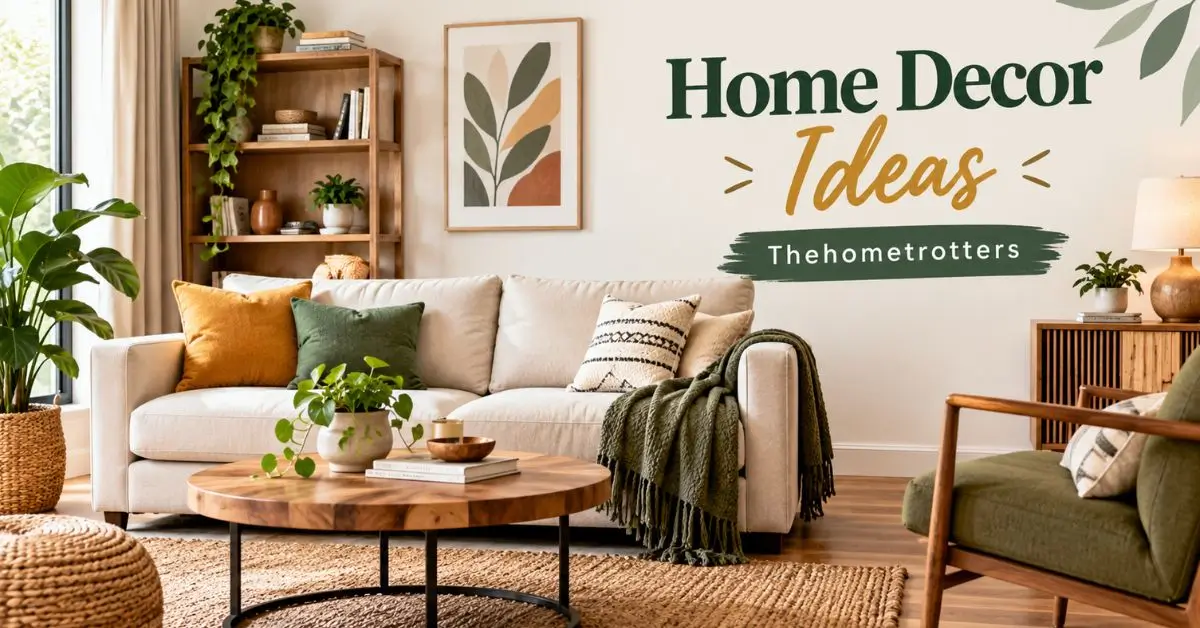
Living Room Decor: Building Comfort and Warmth
The living room serves as the social heart of the house. It is where you unwind after a busy workday, host friends on weekends, and spend quiet mornings with coffee. Because it handles so many activities, the decor needs to be both versatile and welcoming.
Anchor the Space with the Right Rug
A common mistake in living rooms is choosing an area rug that is too small. A tiny rug floating under a coffee table makes the entire room feel cramped. As a general rule, your rug should be large enough so that at least the front two legs of all major seating furniture rest comfortably on top of it. For most standard living rooms, an 8×10 foot or 9×12 foot rug works best.
Master the Rule of Lighting Layers
Never rely solely on a single overhead ceiling light. Overhead fixtures create harsh shadows and make rooms feel cold. Instead, build three distinct layers of light:
- Ambient lighting: Soft ceiling fixtures or recessed lights on dimmer switches.
- Task lighting: A sleek reading floor lamp placed beside your favorite armchair.
- Accent lighting: Small table lamps on credenzas, picture lights over artwork, or warm LED strip lights hidden behind bookshelves.
Always choose warm white bulbs between 2700K and 3000K. This simple switch immediately softens the mood of your living area.
Pillow and Textile Styling
You do not need to replace your sofa to get a fresh look. Swap out your throw pillow covers based on the season. When styling pillows, use the rule of three: combine one solid textured fabric, one geometric or striped pattern, and one organic or floral print. Keep them in complementary shades so they look curated rather than mismatched.
Applying these home decor ideas thehometrotters tips will help you turn a plain living area into a cozy, functional gathering spot without spending thousands of dollars.
Kitchen and Dining Area Upgrades
Kitchens and dining spaces are working rooms, but they still deserve thoughtful design touches. Since kitchen remodels are notoriously expensive, minor decorative adjustments offer the best return on your investment.
Upgrade Everyday Hardware
Cabinet handles and drawer pulls act like jewelry for your kitchen. Builder-grade brass or worn silver pulls can date an otherwise clean kitchen. Replacing old hardware with modern matte black, brushed brass, or antique pewter options can completely transform your cabinets. A pack of twenty modern handles costs around $30 to $60 online and requires only a basic screwdriver to install.
Style Open Counters with Intention
Kitchen counters should stay mostly clear for cooking, but a few styled clusters add warmth. Group items on a round wooden cutting board or a stone tray. Place an olive oil dispenser, a ceramic salt cellar, and a small potted herb next to the stove. This keeps cooking essentials within reach while looking intentional and tidy.
Create a Welcoming Dining Focal Point
For the dining room, focus on the center of the table and the light fixture above it. Hang a pendant light approximately 30 to 36 inches above the tabletop for ideal scale and illumination. For everyday table decor, keep it low so people can talk across the table easily. A simple ceramic bowl filled with seasonal fruit or a low glass vase with dried eucalyptus looks elegant all year.
Bedroom Styling for Rest and Relaxation
Your bedroom should function as a quiet retreat from the busy outside world. When using home decor ideas thehometrotters methods in the bedroom, the primary goal is reducing visual noise and maximizing comfort.
The Bed as the Main Focal Point
Because the bed takes up the most visual weight, how you dress it defines the room. Start with breathable cotton or linen sheets in neutral tones like ivory, soft oatmeal, or slate gray. Add a medium-weight duvet with a fluffy insert, and fold a textured waffle-knit quilt across the foot of the bed. This creates depth and makes the bed look inviting without feeling overly formal.
Clear the Nightstands
Clutter on your bedside table creates subtle mental stress before you go to sleep. Keep only three items on your nightstand: a reading lamp, a book, and a small catch-all dish for rings or glasses. If your nightstand is small, consider installing wall-mounted sconces on either side of the bed to free up surface space completely.
Window Treatments That Matter
Hang your curtain rods high and wide. Place the rod 4 to 6 inches above the window frame, or even closer to the ceiling line, and extend the rod 6 to 10 inches past the sides of the window. This simple design trick draws the eyes upward, creates the illusion of taller ceilings, and lets in the maximum amount of natural sunlight during the day.
Styling Small Spaces and Awkward Corners
Every home has a tight hallway, an odd nook under the stairs, or a small entryway that seems difficult to decorate. Small spaces require smart proportions and functional pieces.
In an entryway, install a narrow console table or a simple floating wooden shelf. Add a large round mirror above it. The mirror reflects light into the hallway and provides a spot to check your appearance before leaving the house. Place two decorative wall hooks beside it for coats and bags, along with a woven basket underneath for shoes.
In empty living room corners, avoid cramming in bulky furniture. Instead, add a tall indoor plant like a fiddle leaf fig, a snake plant, or a monstera in a ceramic pot. Greenery adds organic shapes, cleans the air, and breathes life into dead corners without adding heavy visual weight.
Applying dedicated home decor ideas thehometrotters for small spaces allows you to turn awkward architectural layouts into charming focal points.
Color Palette Strategies: The 60-30-10 Rule
Choosing paint and accent colors is where many homeowners get stuck. Using the classic 60-30-10 rule takes the guesswork out of color selection and ensures your room stays balanced.
- 60% Dominant Color: This is the background canvas of the room. It covers your main walls, large area rugs, and major sofa upholstery. Neutral tones like soft beige, warm white, or muted gray work best here.
- 30% Secondary Color: This provides depth and contrast. It appears in accent chairs, curtains, painted trim, bed linens, or small furniture pieces. Think dusty navy, sage green, or warm terracotta.
- 10% Accent Color: This is your vibrant pop of personality. Use it sparingly in throw pillows, small art pieces, decorative vases, and candles. Good accent shades include mustard yellow, burnt ochre, or bold brass.
text+-------------------------------------------------------------------+
| 60% Base / Walls (Cream, Soft Gray, Warm Beige)                   |
| +---------------------------------------------------------------+ |
| | 30% Secondary / Curtains & Accent Furniture (Sage, Navy, Clay) | |
| | +-----------------------------------------------------------+ | |
| | | 10% Accent / Pillows, Art & Hardware (Mustard, Rust, Brass)| | |
| +---------------------------------------------------------------+ |
+-------------------------------------------------------------------+
By sticking to this proportion, you can combine bold colors without making the room feel chaotic or overwhelming.
Decor Upgrades by Effort and Budget
To help prioritize your home projects, here is a breakdown comparing common decorating tasks based on cost, installation time, and overall visual impact.
| Decor Project | Estimated Cost | Time Required | Visual Impact | Difficulty Level |
|---|---|---|---|---|
| Swapping Light Bulbs to Warm 2700K | $15 to $30 | 15 Minutes | Moderate | Very Easy |
| Painting an Accent Wall or Front Door | $40 to $70 | 3 to 4 Hours | High | Easy |
| Updating Cabinet Hardware | $30 to $80 | 1 to 2 Hours | High | Easy |
| Layering Textiles (Rugs & Pillows) | $80 to $250 | 1 Hour | High | Very Easy |
| Installing Wall Sconces & Shelves | $60 to $180 | 2 to 3 Hours | Moderate | Moderate |
| Gallery Wall with Thrifted Frames | $40 to $100 | 2 Hours | High | Easy |
How to Curate Wall Art on a Budget
Blank walls can make a home feel cold and unfinished, yet buying large framed prints from design galleries can cost hundreds of dollars. Fortunately, there are affordable ways to build impressive wall displays.
First, check local thrift shops for vintage wood and gilded frames. Do not worry about the artwork inside the frame. Focus entirely on the frame’s shape, size, and material. You can easily spray paint old frames or sand them down to reveal natural wood grain.
Second, download high-resolution printable art from public domain museum archives, such as the National Gallery of Art or the Metropolitan Museum of Art. You can print these digital files at your local print shop on matte cardstock for less than $5 each.
When hanging art, keep the center point of the frame or gallery collection at standard eye level, which is 57 to 60 inches from the floor. If you are hanging art above a sofa or headboard, leave 6 to 8 inches of space between the top of the furniture and the bottom of the frame. This keeps the items visually connected rather than floating randomly on the wall.
Using these thrifty home decor ideas thehometrotters suggestions will give your home character and personal charm on a modest budget.
Step-by-Step Action Plan for Your Next Decor Project
When you are ready to update a room, follow this simple five-step process to stay organized, save money, and avoid costly design errors.
Step 1: Empty and Declutter First
Before buying any new decor, clear out items you no longer use, love, or need. It is impossible to decorate around clutter. Donate extra items, throw away broken pieces, and wipe down all surfaces.
Step 2: Establish Your Functional Layout
Measure your room dimensions and map out where the major furniture pieces will sit. Make sure you have clear walking pathways at least 30 inches wide throughout the room. Never block windows, doors, or heat vents with heavy furniture.
Step 3: Pick Your Base Color Palette
Select your 60-30-10 color trio before you purchase a single decorative accessory. Having swatches or reference photos on your phone prevents you from buying random items that clash with the rest of the room.
Step 4: Invest in the Anchor Pieces
Spend your budget on the items you interact with every single day, such as a comfortable couch, a sturdy mattress, or an easy-to-clean dining table. These pieces should be durable, neutral, and timeless.
Step 5: Layer Details and Accessories
Add the final decorative layers last. Bring in lamps, throw blankets, potted plants, books, scented candles, and framed art. This is where you bring in favorite home decor ideas thehometrotters concepts to express your unique personality and tastes.
Common Decorating Mistakes to Avoid
Even well-intentioned decorating plans can go wrong if you fall into common design traps. Keep these practical warnings in mind as you style your rooms.
Pushing All Furniture Flat Against Walls
Many people believe pushing all chairs and sofas flat against the perimeter walls makes a room look bigger. In reality, it leaves an awkward empty void in the center of the room. Pull seating a few inches away from the walls to create cozy conversation clusters.
Overmatching Everything
Buying an entire matching set containing the bed frame, dresser, nightstands, and mirror from one showroom floor makes a room look dated. Instead, combine different finishes. A black iron bed looks wonderful paired with warm oak nightstands and a painted vintage dresser.
Ignoring Scale and Proportion
Pay attention to the scale of your items. A tiny piece of art hung above a massive eight-foot sectional looks out of place. Similarly, a massive heavy wooden coffee table placed in a narrow living room blocks natural movement. Match large furniture with bold accents, and use smaller, delicate pieces in compact areas.
Implementing balanced home decor ideas thehometrotters techniques will help you bypass these pitfalls and achieve a cohesive, designer-quality look.
Real-World Example: A Budget Living Room Makeover in Ohio
To see how these concepts function in everyday life, consider a recent real-world living room update in a suburban Columbus, Ohio home. The homeowner had a dark, cluttered living room with beige walls, mismatched furniture, and inadequate lighting.
With a strict $400 total budget, here is how the space was transformed:
- Paint update ($65): Painted the main walls with two coats of warm off-white paint to brighten the natural light.
- Lighting ($80): Added a brushed brass floor lamp in the corner and replaced all harsh 5000K daylight bulbs with soft 2700K warm LED bulbs.
- Textiles ($145): Purchased a neutral 8×10 flat-weave rug and three textured pillow covers in forest green, cream, and rust tones.
- Thrifted Art & Plants ($75): Gathered four vintage wood frames from a local thrift store, printed landscape art from public domain archives, and placed a potted golden pothos plant on the bookshelf.
- Rearranging ($0): Pulled the couch away from the wall, centered it on the rug, and cleared off unnecessary surface clutter.
The final result was a bright, cozy, and intentional living room completed over a single weekend for under $400.
Frequently Asked Questions
What is the most affordable way to update home decor?
The most affordable way to update home decor is to refresh the paint, improve lighting, and rearrange existing furniture. These simple changes can make a room feel new without buying expensive items.
How can I make my home look cozy on a budget?
Use soft textiles, warm lighting, indoor plants, and natural materials to make your home feel cozy on a budget. Blankets, curtains, pillows, and woven baskets can add warmth without major spending.
How do I choose the right rug size for my living room?
Choose a rug large enough for at least the front legs of your sofa and chairs to sit on it. For many living rooms, an 8×10 or 9×12-foot rug provides good coverage and balance.
What are the best neutral paint colors for small rooms?
Warm white, soft cream, light greige, and pale sage are effective neutral colors for small rooms. Light shades can reflect more natural light and make the space feel brighter and more open.
How do I style a bookshelf without making it look cluttered?
Mix vertical and horizontal books while leaving some shelf space empty for visual balance. Add a few small items such as plants, vases, or framed artwork without overcrowding the shelves.